Rug Cleaning Edith Weston
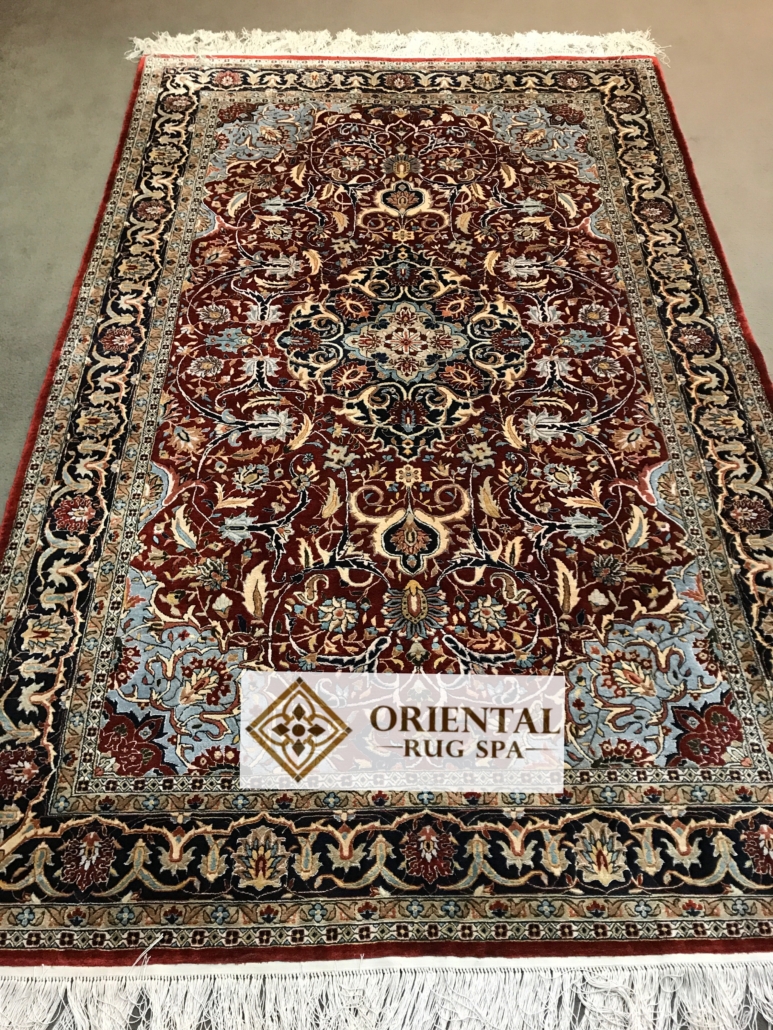
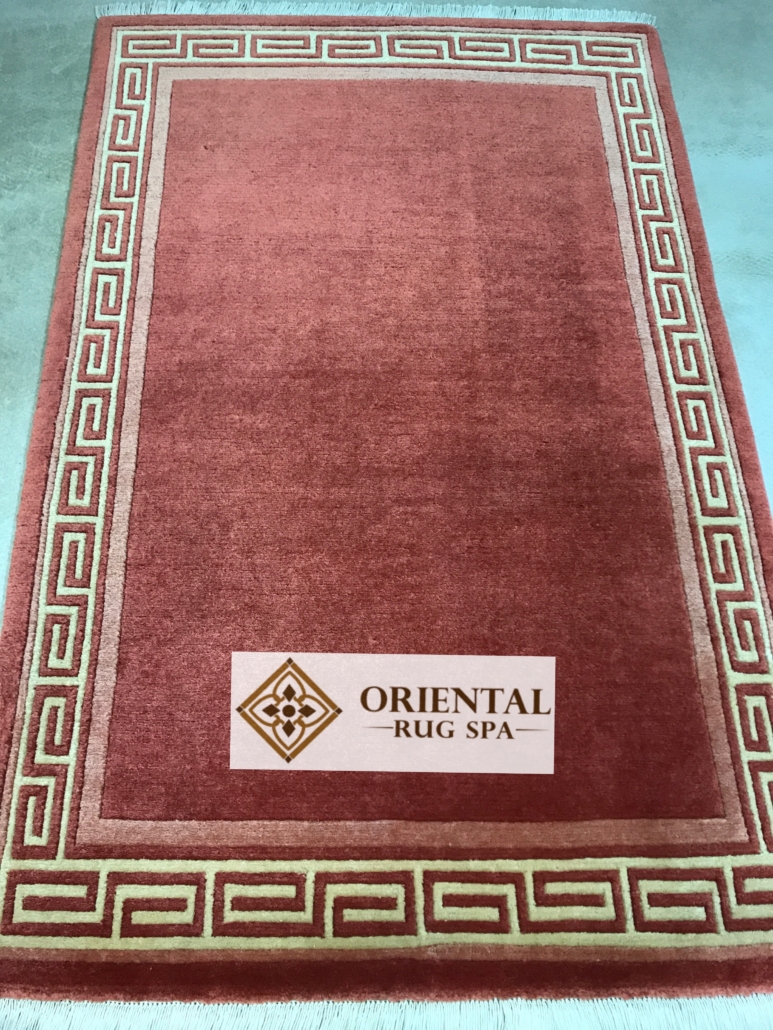
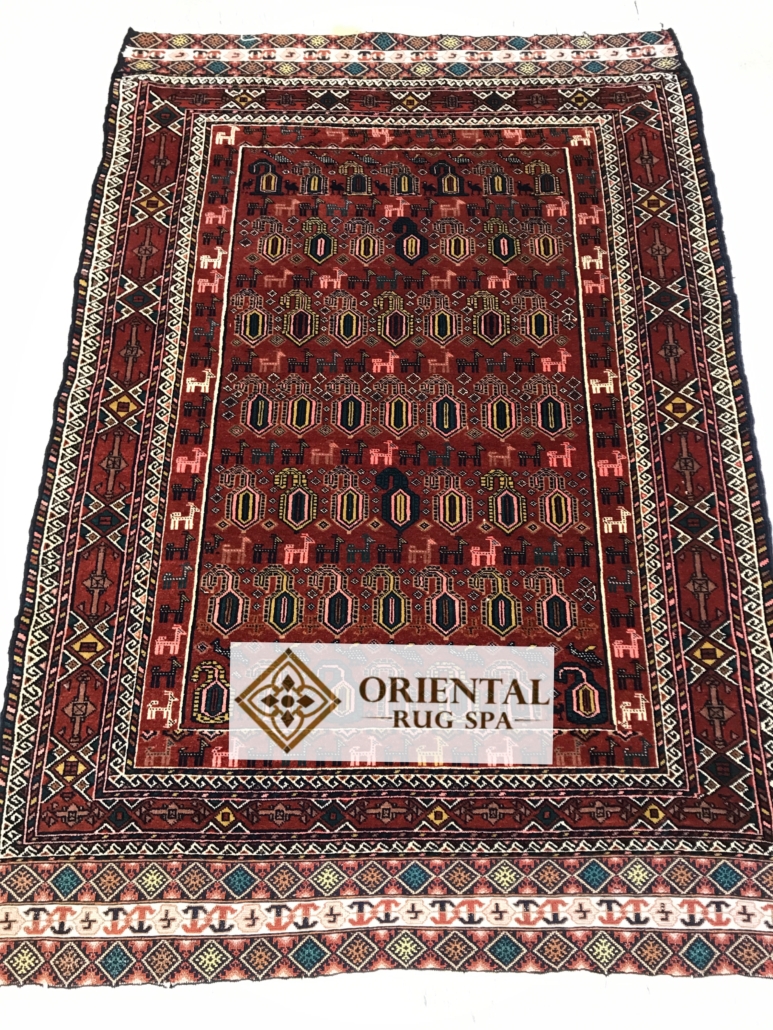
Oriental Rug Spa offer a specialist Persian, Oriental and Turkish rug cleaning for Hambleton, Rutland. We also offer a rug repair service. If you own a dirty or soiled rug that needs professional cleaning, then why not give us a call on 01276 423 150. We can arrange collection and delivery for you. The rug wash process required can differ from rug to rug, so we offer various methods of rug cleaning, from full immersion washing to dry cleaning. All rug fibres can be cared for – wool, cotton, silk and viscose. We can carry out a pet stain and odour treatment, moth treatment and apply a fibre protection to resist against soiling and staining. We have extensive experience with cleaning antique rugs and rugs with unstable dyes and offer a rug repair service, including fringes, sides and pile reweaving.
Afghan Ensi Rugs
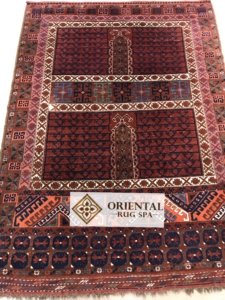
Afghan Ensi
The Origins of the Ensi Design in Afghan Rugs
Among the most distinctive and historically rich designs found in Afghan rugs is the Ensi (also spelled engsi or hatchli). Though these rugs are today prized as decorative pieces, their origins are deeply rooted in the nomadic life of the Turkmen tribes of Central Asia — and their symbolism runs far deeper than their striking geometric patterns might suggest.
A Door Between Worlds
The Ensi was originally woven to serve a very specific purpose: as a door hanging for the yurt, the circular, felt-covered tent in which Turkmen nomads lived. Roughly square in shape and typically measuring around 1.4 by 1.5 metres, the Ensi would be hung across the entrance of the tent, protecting the interior from the extremes of the Central Asian climate whilst also marking the symbolic threshold between the domestic world within and the wider world outside.
The name itself gives a clue to its function. The Turkic word en refers to width — that of a doorway — whilst the suffix points to the textile’s purpose as an enclosure. The alternative name, hatchli, is the old Armenian word for “cross”, referring to the cross-shaped composition that defines the design.
The Hatchli Format: Four Quarters and Deep Symbolism
The most immediately recognisable feature of any Ensi rug is its hatchli layout: the field is divided into four rectangular panels by a broad vertical band and a broad horizontal band, forming a prominent cross or “plus” shape across the face of the rug. Each of the four quadrants is then filled with repeating geometric motifs, whilst the dividing bands themselves are ornamented with small hooked or serrated elements. A separate panel, known as the elem, typically runs along the bottom — and sometimes the top — of the rug as a decorative skirt, often featuring stylised floral or tree-of-life motifs.
The symbolism of this cruciform composition has been interpreted in several ways. Some scholars argue the four quarters represent the four gardens of paradise, connecting the Ensi to the ancient Persian tradition of the chahar bagh (fourfold garden), the same concept that inspired formal Persian garden design and countless carpet compositions throughout the Islamic world. Others read the cross as a shamanistic symbol, with the three horizontal zones of the rug representing the three levels of the universe in pre-Islamic Turkmen cosmology: the Upper World, the Middle Kingdom of the earth, and the underworld below.
There is also a compelling interpretation that the Ensi functioned as a “gateway to paradise” — quite literally the threshold between the earthly and the divine, hung at the entrance of the home. The vertical central band, with its branching offshoot motifs, is sometimes read as a highly abstracted Tree of Life, standing guardian at the doorway. In this light, the Ensi was not merely a functional door covering but a richly charged ritual object, warding off evil and invoking blessing upon all who entered.
Which Tribes Made Them?
The Ensi design appears to have been woven by virtually all of the major Turkmen tribes, with a striking consistency of format that suggests a single, ancient common origin for the design. In Afghanistan, the primary weavers of Ensi rugs were tribes such as the Tekke, Yomut, and Ersari, who settled and roamed across the northern regions of the country between Maimanah and Kunduz. Each tribe brought its own subtle variations — in the choice of field motifs, the treatment of the elem border, and the colour palette — but the underlying hatchli structure remained constant.
The Tekke tribe, originally from the region around Merv (in present-day Turkmenistan), is particularly associated with fine-quality Ensi weaving, and their versions often feature a stylised mihrab or arch at the top of the field, further underlining the rug’s spiritual associations. Yomut Ensis, meanwhile, are known for their wider variety of field motifs and a broader colour palette that extends beyond the dominant madder reds into aubergines, indigo blues, and soft ivory tones.
Ritual or Everyday Object?
Scholars continue to debate whether the Ensi was primarily a functional door covering used daily, or whether it was reserved for special occasions such as weddings and other ceremonial events. Some art historians note that there are very few historical photographs showing an Ensi actually in use as a door hanging, which has led to the suggestion that these rugs may have been brought out only for significant rites of passage. Certainly, their intricate workmanship and symbolic richness suggest they were objects of considerable importance within the household.
From Tent Door to Collector’s Piece
As nomadic Turkmen life gave way to more settled patterns of existence — accelerated by the Russian conquest of Central Asia in the late nineteenth century and the subsequent disruption of traditional weaving communities — the Ensi gradually shifted from a domestic necessity to a commercial and collectible product. By the twentieth century, the design was being reproduced for the export market, and today Afghan-made Ensi rugs are collected worldwide for their bold geometry, their historical resonance, and the extraordinary depth of meaning woven into every band and quarter of their timeless composition.


Extremely pleased with the result and would happily use them again.


They were 19 years old and a little flat and slightly stained.
They came back totally renewed. The pile was lifted and
colours restored. I would recommend this Rug Spa.