Afghan Rug Cleaning Camberley
Oriental Rug Spa offer a specialist Persian, Oriental, Turkish and Afghan rug cleaning for Camberley, Surrey. We also offer a rug repair service. If you own a dirty or soiled rug that needs professional cleaning, then why not give us a call on 01276 423 150. We can arrange collection and delivery for you. The rug wash process required can differ from rug to rug, so we offer various methods of rug cleaning, from full immersion washing to dry cleaning. All rug fibres can be cared for – wool, cotton, silk and viscose. We can carry out a pet stain and odour treatment, moth treatment and apply a fibre protection to resist against soiling and staining. We have extensive experience with cleaning antique rugs and rugs with unstable dyes and offer a rug repair service, including fringes, sides and pile reweaving.
Afghan Rugs

Professional Afghan rug cleaning service covering Camberley, Bagshot, Lightwater and the surrounding Surrey area
Afghan Rugs: A Guide to Their History, Craftsmanship & Care
Afghan rugs are among the most treasured floor coverings in the world — and for good reason. Handwoven primarily in the northern and western regions of Afghanistan by Turkmen and Uzbek artisans, they represent a craft tradition that has endured for thousands of years. If you’re lucky enough to own one, understanding what makes it special is the first step to caring for it properly.
A Rich Weaving Tradition
Your Afghan rug boasts an incredibly rich history that weaves together times gone by, strife, and the love of a colourful culture that has endured both pleasure and pain. Afghanistan’s geographical location — between Europe, Asia and the Middle East — means its cultural heritage has been shaped by travellers from all of these regions, and that influence is visible in every aspect of Afghan rug design.
Around 1.2 million people are involved in the rug trade in Afghanistan, and the weavers are predominantly women — a tradition of skill passed carefully from one generation to the next.
Construction & Materials
Authentic Afghan rugs feature hand-knotted construction using natural materials, typically handspun Ghazni wool pile on a cotton foundation. The quality of an Afghan rug can be determined by its knots per square inch — the higher the knot count, the higher the quality and the greater the durability. This density also gives Afghan rugs their characteristic firm, luxurious feel underfoot.
Most Afghan rugs are made up of Persian knots and feature vegetable-dyed, hand-spun Afghan wool — and many take between six and nine months to complete. That investment of time and skill is precisely why they deserve expert care.
Distinctive Designs
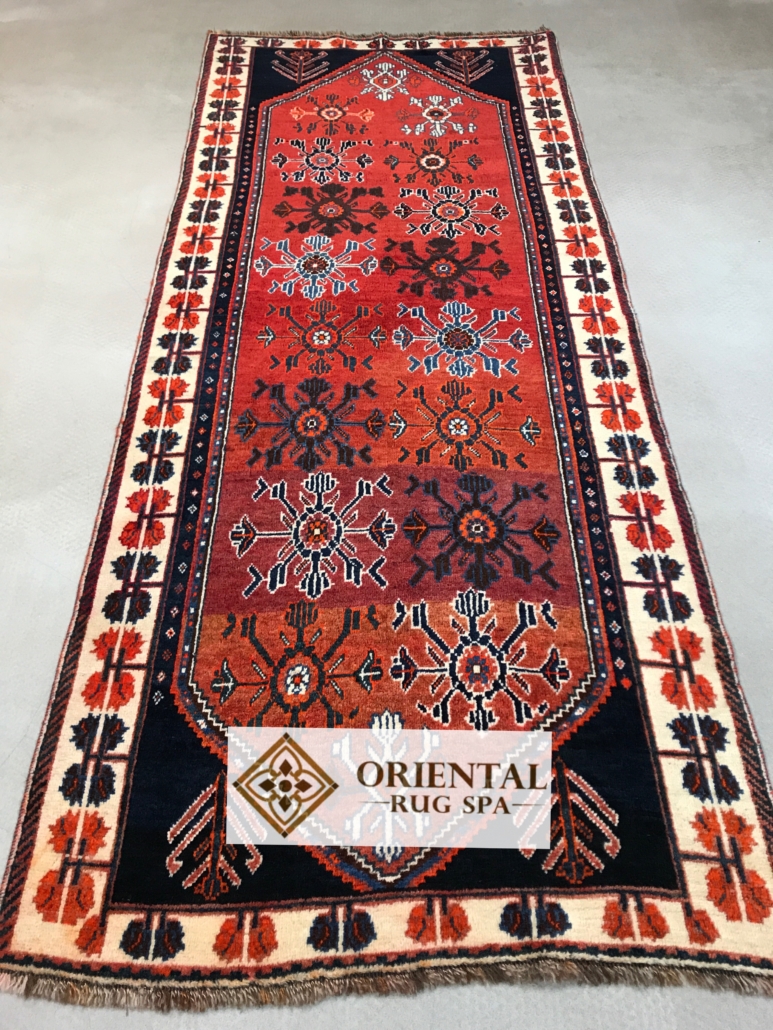
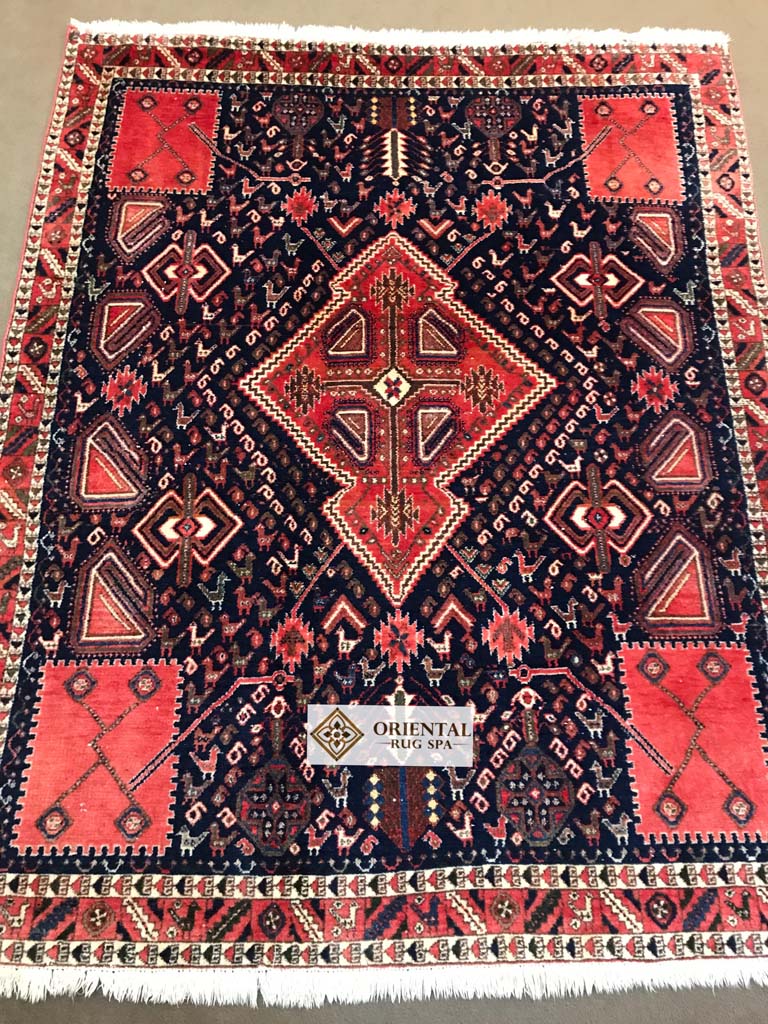
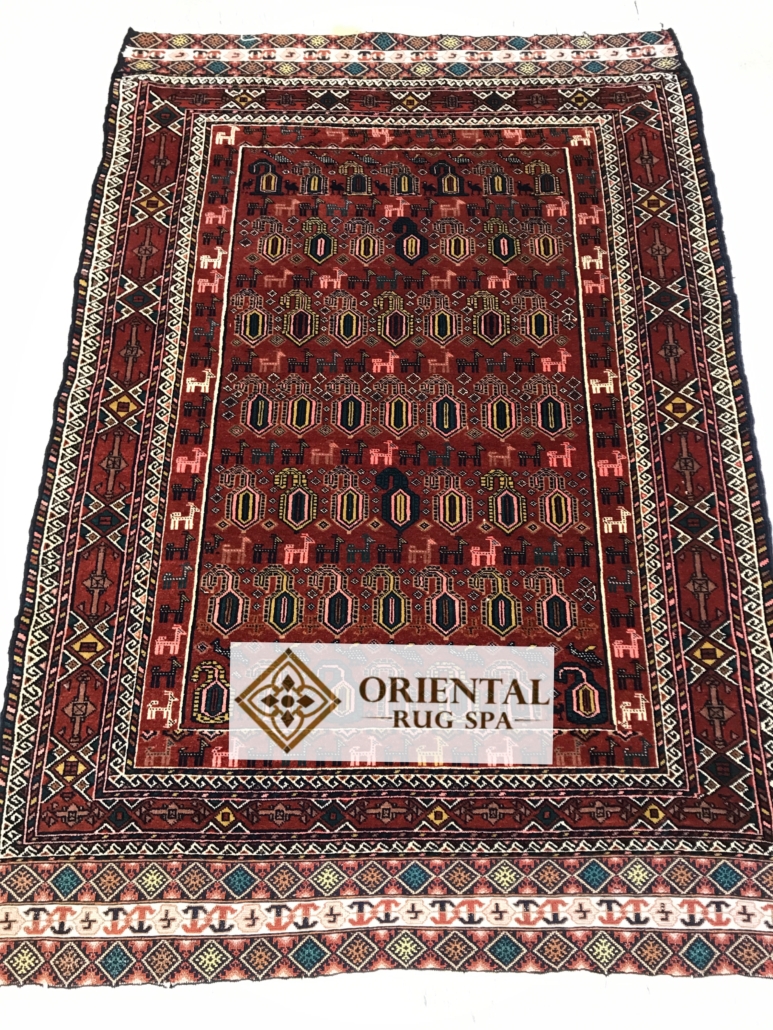
The designs are mainly bold and geometric, with little or no floral or delicate elements. The most traditional is the octagonal elephant’s foot (Bukhara) print, often set against a deep red background, with accents of navy, black, ivory, and orange.
Different tribes and regions produce their own distinct styles. The Daulatabad (or simply “Afghan”) rug, made by Turkmen weavers in northern Afghanistan, is the style most familiar to Western buyers — featuring vivid red and very dark blue colouring. Shindand rugs, from the Herat province, are more exotic and unusual, incorporating rare depictions of human and animal figures. Baluch rugs, meanwhile, are known for angular geometric precision and deep, earthy tones.
Afghan War Rugs
One of the more remarkable chapters in Afghan weaving history is the emergence of war rugs. Known as qalin-e jangi in Dari, war rugs emerged with the Soviet invasion of Afghanistan in 1979 and blend traditional tribal patterns with contemporary imagery such as tanks, helicopters, and weapons. They are now considered historically significant collector’s pieces.
Caring for Your Afghan Rug
Because Afghan rugs are made from natural wool with vegetable and other organic dyes, they require specialist attention. DIY cleaning risks shrinkage, colour run, and damage to the pile — particularly with older or antique pieces. Professional cleaning by someone experienced with hand-knotted Oriental rugs is always the recommended approach.
High-quality Afghan rugs are often considered valuable investments that tend to appreciate over time — antique and rare examples in particular can command significant prices. Protecting that investment with proper, regular cleaning is simply good sense.


Extremely pleased with the result and would happily use them again.


They were 19 years old and a little flat and slightly stained.
They came back totally renewed. The pile was lifted and
colours restored. I would recommend this Rug Spa.