Rug Cleaning Lutterworth
Oriental Rug Spa offer a specialist Persian, Oriental and Turkish rug cleaning for Lutterworth, Leicestershire. We also offer a rug repair service. If you own a dirty or soiled rug that needs professional cleaning, then why not give us a call on 01276 423 150. We can arrange collection and delivery for you. The rug wash process required can differ from rug to rug, so we offer various methods of rug cleaning, from full immersion washing to dry cleaning. All rug fibres can be cared for – wool, cotton, silk and viscose. We can carry out a pet stain and odour treatment, moth treatment and apply a fibre protection to resist against soiling and staining. We have extensive experience with cleaning antique rugs and rugs with unstable dyes and offer a rug repair service, including fringes, sides and pile reweaving.
Lion of Fars
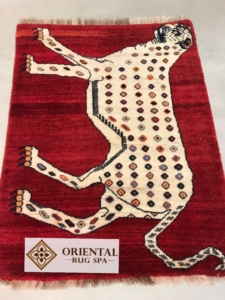
Lion of Fars Design
The Lion of Fars rug is a distinctive type of Persian tribal carpet, originating from the Fars province in southern Iran. These rugs are particularly associated with the Qashqai tribes, who are semi-nomadic pastoralists known for their exceptional weaving traditions.
The defining characteristic of these rugs is their bold central motif depicting a stylised lion, often shown in profile. The lion design is quite abstract and geometric rather than realistic, reflecting the tribal weaving aesthetic. The lion typically appears against a plain field, sometimes accompanied by other animals, birds, or geometric patterns. The imagery is thought to symbolise strength and courage, and may have historical connections to Persian royal iconography, as the lion was an important symbol in pre-revolutionary Iran.
These rugs are traditionally hand-knotted using wool, with vegetable dyes producing rich, warm colours—particularly reds, blues, and earth tones. The weaving technique is characteristic of nomadic production: relatively loose knotting, asymmetric knots, and thick, durable pile designed to withstand the rigours of tribal life.
Lion of Fars rugs are highly sought after by collectors today, both for their striking visual impact and their cultural significance. Genuine antique examples, particularly those from the 19th and early 20th centuries, can be quite valuable. The design has been copied and mass-produced in more recent years, so collectors need to be discerning about age and authenticity.


Extremely pleased with the result and would happily use them again.


They were 19 years old and a little flat and slightly stained.
They came back totally renewed. The pile was lifted and
colours restored. I would recommend this Rug Spa.

It was returned within the promised time frame and it is now back in position looking and feeling very much better.


Your service was excellent from start to finish the rug was beautifully clean, the pile was totally revitalised and it smelt so fresh again after my Border Terrier had a little accident on it! I would highly recommend your service from my experience.